Wondering how to get salt out of car mats without leaving those stubborn white marks? Start by vacuuming away loose salt, then use warm water to dissolve the remaining deposits. The most important step is removing the salty water before it dries, otherwise the white stains may return.
For carpet mats, use a small amount of water and blot away the moisture with a clean towel. Rubber and TPE mats are generally easier to clean because their surfaces can often be rinsed. Remove the mats from your vehicle before cleaning to keep salty water away from the interior carpet.

Why Do Salt Stains Come Back After Cleaning?
A returning white mark often means dissolved salt was left behind. Water dissolves many road-salt deposits, but as it evaporates, those minerals remain on the surface or inside the mat. Wiping the top of carpet can leave brine deeper in the fibers.
Check the mat once it is dry and before the next snowy trip. If it dries clean but turns white after another drive, shoes may be bringing in fresh salt. If discoloration persists despite cleaning, consider detergent residue, wear, or staining rather than treating every mark as remaining salt.
What Do You Need Before Removing Salt Stains From Car Mats?
You don't need specialized detailing equipment to remove most road salt stains. Start with a few basic cleaning supplies:
- A vacuum cleaner
- A soft-bristled brush
- Clean white microfiber towels
- Lukewarm water
- A mild carpet cleaner or mat-safe cleaning solution
- A wet/dry vacuum or carpet extractor (optional)
Remove the mats from your vehicle and place them on a clean, washable surface. Test any cleaning solution on a small, hidden area first, particularly if the mat has colored fibers or decorative trim.
If you're using a vacuum to remove dirty water, make sure it is designed for wet pickup.
How Do You Remove Salt From Car Mats Step by Step?
Clean the removed mat with the gentlest treatment approved for its material. Judge the result after it dries: a wet surface can hide residue that will show up again later.
Step 1. Vacuum or Brush Away Dry Salt First
Gently brush and vacuum dry salt and grit, paying attention to seams and the heel area. Avoid grinding crystals into the fibers. Empty large piles into the trash rather than washing them deeper into the mat.
Let loose surface moisture drain before working on dry deposits. If the mat is soaked with slush, blot it or recover the liquid with wet-rated equipment first. Never use a dry-only vacuum on wet material.
Step 2. Apply a Small Amount of Compatible Cleaning Solution
Start with lukewarm water to dissolve the white salt deposits. For carpet mats, lightly dampen the stained area rather than soaking the entire mat.
If water alone doesn't remove stubborn stains, try a mild carpet cleaner. A mixture of equal parts white vinegar and water is another common option for carpet mats that tolerate vinegar. Test it on a small, hidden area first.
For washable rubber and TPE mats, warm water and a small amount of mild dish soap are often enough to remove salt and road grime. Avoid using too much soap, as it can leave a residue of its own. Never mix different cleaning products.
Step 3. Agitate Gently to Dissolve the Mineral Residue
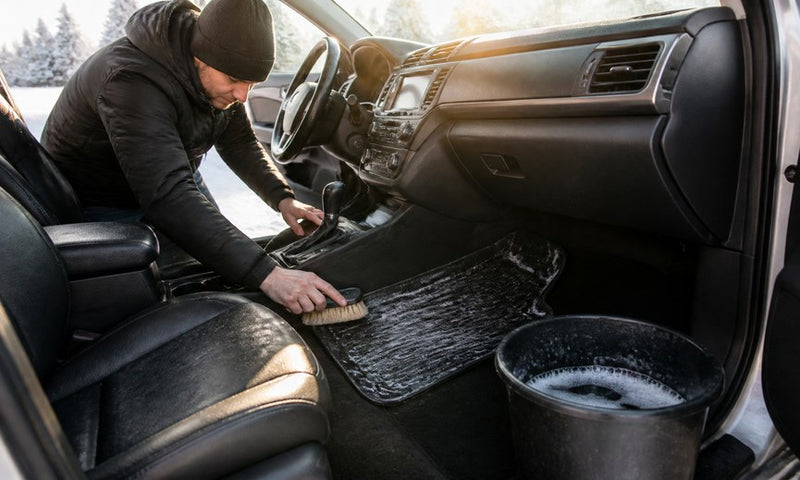
Work the dampened deposit gently with a soft brush, approaching it from several directions. You are loosening residue into the liquid, not scrubbing away the mat's surface. Stop if fibers fuzz, dye transfers, or a coating changes appearance.
Treat small areas so you can recover the dirty liquid before it dries. For a stubborn crust, repeat the controlled wetting rather than scraping harder.
Step 4. Blot or Extract the Dirty Liquid
Press a clean towel into damp carpet, lift it away, and switch to a clean section as it collects moisture. Blot rather than rubbing, which spreads dirty liquid across more fibers. If using a wet-rated extractor, make slow recovery passes according to its instructions.
For a washable molded mat, collect or rinse away the dirty solution outside the vehicle. Clear the channels and raised borders, where brine can pool even after the flat areas look clean.
Step 5. Rinse Lightly if Needed and Extract Again
If the cleaner requires rinsing, apply a small amount of clean water and recover it again. With carpet, use repeated light rinse-and-recovery cycles rather than flooding the backing. Replace dirty towels or rinse water so the removed minerals do not go back onto the mat.
Let a test area dry before treating it again. A returning white outline suggests residue remains, so repeat the process locally. If another cycle stops producing improvement, reassess the stain and material instead of increasing chemical strength.
Step 6. Dry the Mat Completely Before Reinstalling
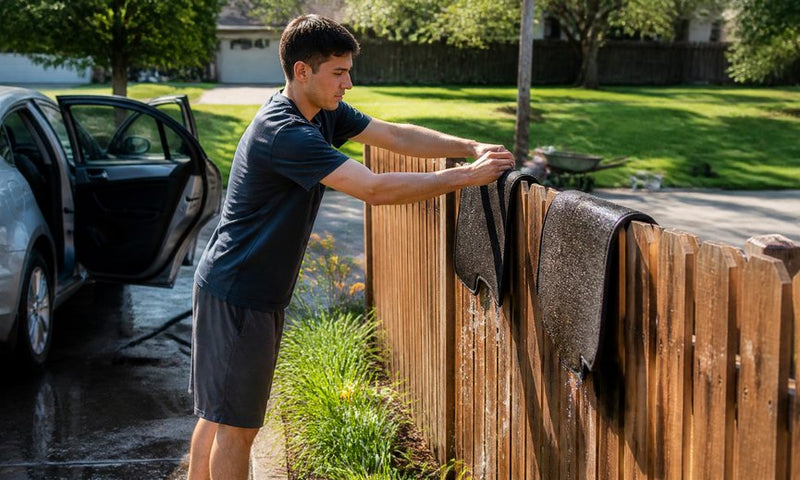
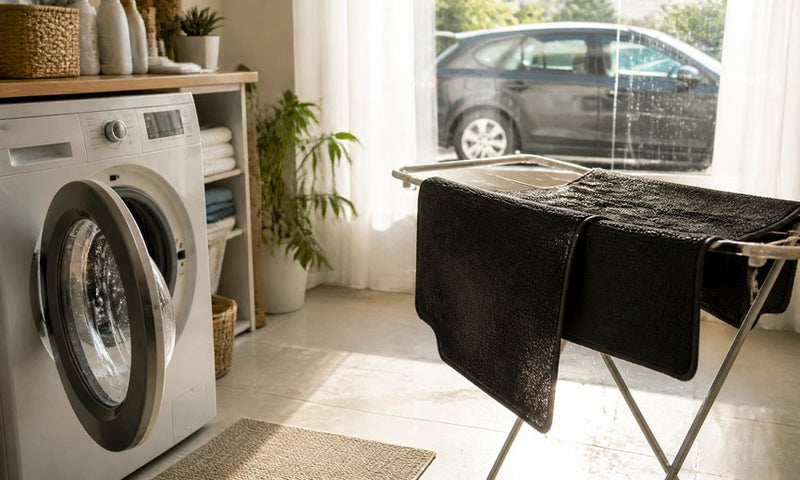
Wipe molded surfaces and let both sides air-dry. Support carpet mats so air reaches the backing. If outdoor conditions are damp, use a fan in a suitable indoor space. Avoid dryers, heaters, or intense heat unless the care instructions explicitly allow them.
Check seams and the underside, and press a dry towel against thick carpet to check for remaining moisture. The cabin carpet should also be clean and dry. Reattach the mat with the vehicle's specified retention system and confirm that pedal movement is unobstructed.
What Changes for Carpet, Rubber, and TPE Mats?
Carpet holds liquid within its fibers, while washable molded mats let you remove dirty water from the surface and channels. Identify the material from its label or product information; flexible black mats do not all have the same care requirements.
For carpet, focus on light wetting, blotting or wet extraction, and airflow to the backing. Flooding the mat makes moisture harder to recover. For rubber and TPE, follow the manufacturer's washing instructions, rinse only if permitted, and clear trapped brine from channels and borders. Check attached trim or components before immersing either type.
Tired of scrubbing white salt stains out of carpet mats every winter? Michelin all-weather floor mats offer an easier-to-clean alternative. Their molded surfaces help keep road salt, melted snow, and muddy water away from the vehicle's carpet, making everyday winter cleanup more manageable.
For Jeep owners who frequently encounter snow, slush, and muddy trails, Michelin Jeep Wrangler JL floor mats offer custom-fit, all-weather protection that's easy to clean after a messy drive. This set is designed for 2018–2026 Wrangler JL 4-door gas and mild-hybrid models.

How Can You Keep Road Salt From Building Up Again?
Remove salt and slush before they accumulate into a thick white crust. Knock excess snow off boots before entering, empty collected slush before it overflows, and remove loose grit during routine cleanup.
Inspect mats after heavily salted trips and remove pooled water even when a properly fitted liner contains the mess. Keep a towel available for small spills, but do not leave a wet towel under the mat. Never stack another mat on top for winter protection.
Conclusion
Remove loose salt, dissolve the residue with a compatible treatment, and recover the dirty liquid before drying. Check the dry result before repeating a treatment. Keeping brine out of the cabin carpet and cleaning small deposits early makes the next winter cleanup more manageable.
FAQ
Are salt stains hard to remove?
Fresh deposits are often manageable, while repeated buildup in carpet takes more patience. A stain that survives one surface wipe is not automatically permanent. Try controlled treatment and recovery before using a harsher product.
Can salt stains cause permanent damage to car mats?
Long-standing contamination and aggressive scrubbing can leave damage or discoloration that cleaning cannot reverse. Inspect for brittle backing, worn fibers, or damaged trim after the residue is removed. Replace a mat if its condition compromises fit or retention.
How often should I clean my car mats during winter months?
During winter, cleaning your car mats once a week is a good starting point. If you frequently drive on salted roads or through heavy snow, remove collected slush and salt more often. Don't wait until thick white stains appear before cleaning.