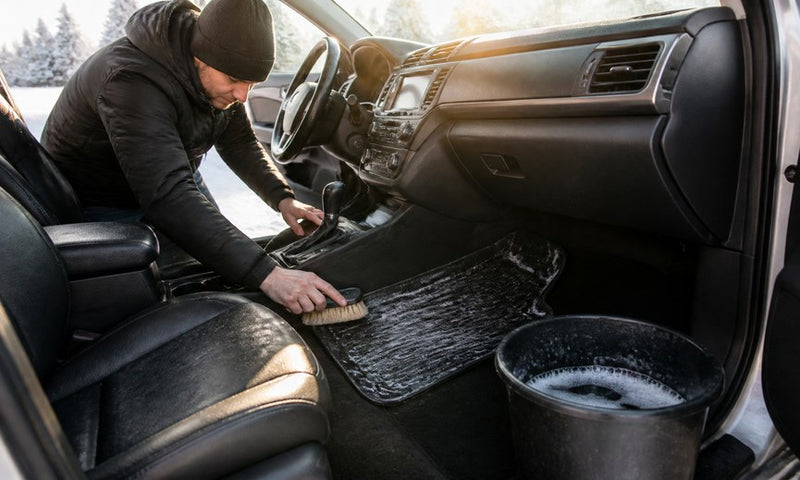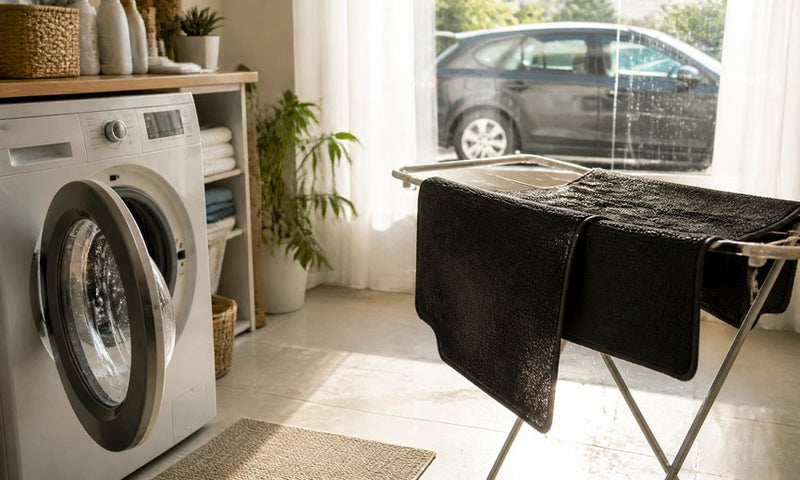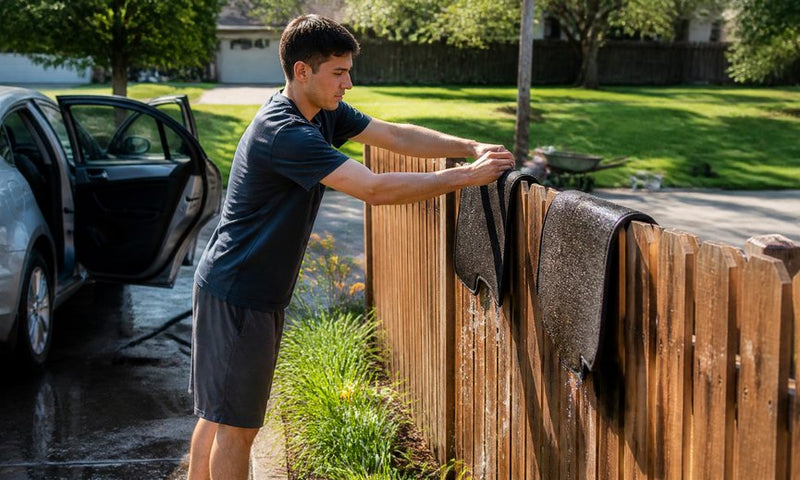
The fastest way to dry car mats is to remove as much water as possible with absorbent towels or a wet/dry vacuum, then let air circulate around both sides. A fan can speed up the process, especially when drying mats indoors.
Carpet mats usually take longer to dry because moisture can become trapped in the fibers and backing. Rubber and TPE mats are generally quicker to dry once water is removed from their grooves and undersides. Make sure both the mats and the vehicle's floor are completely dry before reinstalling them.

What Should You Do Before Drying Car Mats?
Set up a ventilated drying area outside the cabin whenever practical, with enough room to keep the mats separate. Contain runoff so it cannot make the floor slippery or soak another absorbent surface, and leave access to the vehicle so you can check the footwell.
Choose a Drying Area With Good Airflow
A covered outdoor rack works in dry weather. During rain or snow, use a sheltered indoor spot with a washable surface and room for air to circulate around each mat. Keep wet mats off finished wood and clean household carpet.
Check the Mat Material and Backing
Check both the surface and backing of your car mats before drying. Carpet mats with rubber or foam backing tend to hold moisture longer, while molded rubber and TPE mats usually need little more than thorough wiping and air-drying.
For mats with decorative stitching, printed designs, or bonded layers, avoid excessive heat and twisting. Room-temperature airflow is generally the safest way to dry most car mats without damaging their shape or finish.
How Do You Dry Car Mats Step by Step?
Remove free water first, then support the mats so air can reach both sides. This sequence applies after washing or exposure to clean water; sewage, floodwater, or extensive mold requires a separate cleaning or replacement assessment because drying alone does not make a mat clean.
Step 1. Shake Off Water and Blot the Surface
Hold a flexible molded mat securely and tip water out of its channels without sharply folding it. Blot both sides with absorbent towels. For carpet mats, press towels into wet areas and replace them as they become saturated.
Keep carpet mats flat enough to protect their backing and binding—do not twist them to wring out water. Every bit of water you remove with towels reduces what the fan must evaporate later.
Step 2. Extract Moisture From Carpet Mats if Possible
A wet/dry vacuum or carpet extractor can remove much of the water trapped inside carpet mats and significantly reduce drying time. Move the nozzle slowly across the surface, paying extra attention to thick carpet sections and the heel area.
If you don't have a wet/dry vacuum, press clean, absorbent towels firmly against the carpet and replace them as they become saturated. Never use a regular dry vacuum to pick up water.
Step 3. Position the Mats for Airflow on Both Sides
Place each mat on a broad rack or another support that holds its shape while exposing the underside. Hang it only if the manufacturer permits hanging and the support will not stretch a wet edge or retention hole.
Turn the mat as needed to expose areas touching the support. Keep pieces separate rather than stacked, and remove wet towels from beneath the backing so they do not hold moisture against it.
Step 4. Add a Fan or Dehumidifier When Drying Indoors
Direct a fan across the supported mat. If the room is humid, use a dehumidifier where appropriate to help remove moisture from the air. Follow appliance instructions, keep electrical equipment away from runoff, and route cords out of walking paths.
Open a window only when the incoming air is drier. Damp outdoor air can limit the benefit of ventilation.
Step 5. Check the Front and Back Before Reinstalling
Inspect the underside, edge binding, heel pad, and any thick or layered sections. Press a clean, dry towel firmly against absorbent areas and check for transferred moisture. The top feeling dry is not enough if water remains underneath.
Check the cabin carpet as well. Once the mat and floor are dry, reinstall the mat with its proper retainers and verify pedal clearance. If you need the vehicle before drying is complete, do not put the damp mat back in.
Which Drying Method Works Best for Each Mat Type?
Choose the method by the mat's construction and care label, not a universal drying-time estimate. Molded mats need thorough wiping, while absorbent or layered mats need closer checks for hidden moisture.
Rubber and TPE Mats
Wipe water from grooves, raised edges, and the underside, then support the mat for airflow. Keep it away from heaters, and do not use intense heat to force a bent edge flat.
If you're tired of waiting for carpet mats to dry after every wash, Michelin all-weather floor mats offer a more convenient alternative. Their non-absorbent TPE surfaces are easy to rinse, wipe down, and air-dry, making routine cleaning quicker and easier, especially during rainy or snowy weather.
Carpet and Fabric-Backed Mats
Blot or extract moisture, then give the backing and absorbent layers time to dry. Recheck thick sections, edges, and the heel area as drying progresses rather than judging only by the carpet surface.
How long do car mats take to dry? Rubber and TPE mats may dry within 30 minutes to 2 hours after thorough wiping in a well-ventilated area. Carpet mats often take several hours to overnight, while heavily soaked mats may need 24 hours or longer.
These are rough estimates rather than guaranteed drying times. Using absorbent towels, a wet/dry vacuum, and a fan can help shorten the process. Always check the backing before putting the mats back in your car.
Hybrid, Printed, and Premium Mats
Follow care instructions for the whole assembly, including printed layers, stitching, adhesive, and attached trim. Avoid tumble drying or concentrated heat unless expressly permitted. Support heavy wet sections so their weight does not pull on decorative components.
For Tesla owners looking for an easier cleaning routine, Michelin Tesla Model 3 Highland floor mats feature custom-fit TPE construction for compatible 2024–2027 models. Their washable surfaces make it easy to remove dirt and moisture without waiting hours for carpet fibers to dry.

How Can You Dry Car Mats Faster in Cold or Humid Weather?
Move the mats to a suitable indoor area, remove water with towels or a wet-rated extractor, and use airflow with dehumidification when the room is humid. Keep mats away from radiators, ovens, heat guns, and improvised heaters. Never idle the vehicle in an enclosed space to dry them.
Plan washing for a time when the mats can stay out of the vehicle until fully dry. If dampness persists despite better conditions, inspect hidden layers and adjust the support or airflow instead of returning the mat to the footwell.
What Are the Signs a Mat Is Still Too Damp to Reinstall?
Moisture transferred to a dry towel, damp backing or edges, and wet layered sections mean the mat needs more drying. A musty odor warrants investigation rather than fragrance to cover it up. A cool surface can be a clue, but touch alone is not a precise moisture check.
If dampness keeps returning, inspect the cabin floor beneath the mat for moisture or an ongoing leak. Persistent odor, visible mold, or delaminating backing requires a cleaning or replacement assessment—not simply more time in front of a fan.
Conclusion
Remove water before relying on evaporation, give both sides airflow, and check hidden moisture in the backing and edges. Let material care instructions govern heat and support. Reinstall only when the mat and cabin floor are dry and the mat can be secured correctly.
FAQ
Can I put my car mats in the dryer?
Only if the mat manufacturer explicitly permits machine drying for that exact product. Heat and tumbling can harm backing, trim, or shape. When instructions are unavailable, use supported air-drying instead.
Can you dry car mats in direct sunlight?
Brief exposure to sunlight can help car mats dry faster, but prolonged exposure to strong sunlight and high temperatures may cause some rubber or TPE mats to warp or fade. Carpet mats can also fade over time. A shaded, well-ventilated area is generally a better choice for routine drying.
What’s the best way to dry car mats in winter conditions?
Bring removed mats into a ventilated indoor drying area and keep runoff contained. Use towels or suitable extraction equipment before airflow and dehumidification. Do not leave wet mats in a cold closed vehicle and assume they will dry overnight.